We're ready to help!



Pharmaceutical manufacturers benefit from both Messer’s gas supply and our hands-on understanding of how high-quality production environments operate. Messer works with pharmaceutical facilities, EPC firms, and equipment partners to support new builds, expansions, and scale-up planning, helping gas supply systems align with demanding quality, documentation, and process requirements in GMP-regulated environments across both small-molecule pharmaceutical and large-molecule biopharmaceutical production.
As the FDA’s Quality Management Maturity (QMM) initiative encourages manufacturers to look beyond baseline compliance toward more reliable and resilient quality systems, Messer is working to support a standardized quality agreement framework specifically for our medical gas customers.
We supply gases that meet applicable United States Pharmacopeia (USP) and National Formulary (NF) standards and support customers with the traceability and supply consistency expected in regulated production environments.
Messer’s North American production footprint includes multiple air separation units, extensive bulk storage, and an integrated distribution network designed to support consistent supply for your critical pharmaceutical operations. Our team will work with you to determine the right mode of supply based on specific facility requirements. Depending on the operation, that may include cylinder supply through our distributor network, bulk systems for greater ongoing demand, or on-site generation solutions.
Through our National Operations Center, Messer provides 24/7 monitoring, telemetry-based tank management, and centralized delivery coordination that helps maintain supply continuity and reduce operational risk.
Safety and quality are embedded into how we operate. From production and delivery to on-site systems, our standards support the documentation, traceability, and supply consistency that you need from your supplier.
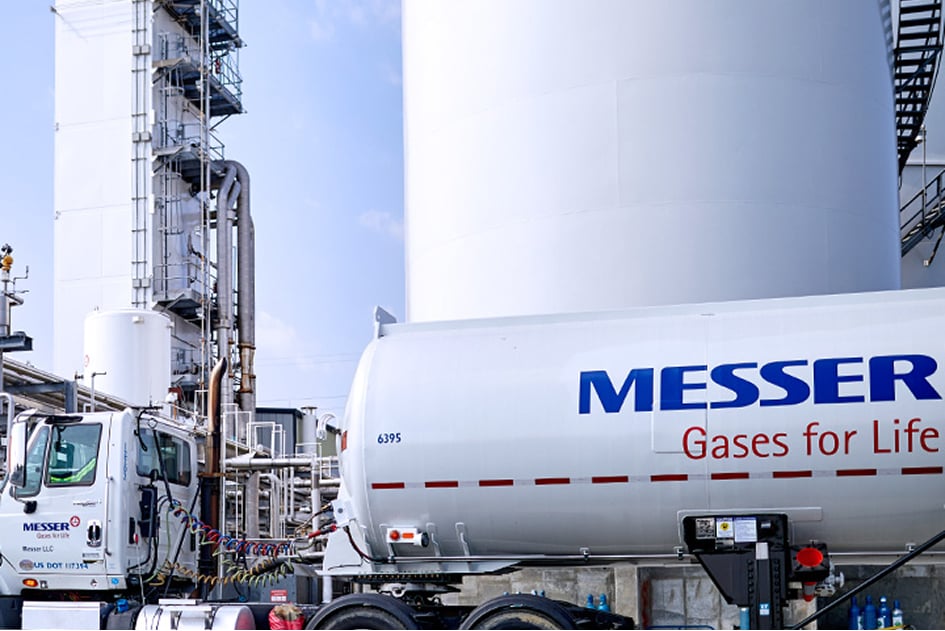
Nitrogen is used across pharmaceutical manufacturing for inerting, blanketing, lyophilization (associated with refrigeration or heat transfer systems), and other controlled-atmosphere applications where purity and process consistency are critical.
Carbon dioxide supports pharmaceutical processes including incubation and cell culture, where it maintains controlled atmospheric conditions and pH, as well as pH adjustment used to control solubility and support crystallization processes, and supercritical CO2 extraction for API purification and residual solvent removal.
Messer supplies USP Oxygen for pharmaceutical processes and plant operations requiring a qualified, regulated gas supply. Produced in FDA-registered facilities, USP Oxygen supports applications such as aerobic bioprocessing, fermentation, oxidation reactions, and wastewater treatment, delivering consistent quality, traceability, and dependable supply for regulated manufacturing environments.
Argon is used in pharmaceutical manufacturing where an inert atmosphere is required to protect sensitive materials and maintain process integrity. Argon (or helium) can be used when ultra‑inert environments are required for sensitive reactions.

Process support: Messer supports lyophilization processes with nitrogen supply, controlled atmosphere support, and cryogenic solutions that help protect product stability and integrity during freeze-drying operations.
Ice Fog technology: Messer’s Ice Fog technology uses purified liquid nitrogen (LIN) and steam to create a sterile, cryogenic ice fog that enters the lyophilization chamber. This helps synchronize the time and temperature at which vials undergo nucleation, supporting more consistent freeze-drying performance.
Messer supports pharmaceutical water and wastewater operations with oxygen for aerobic treatment processes, including BOD/COD reduction and ozone generation, and carbon dioxide for self-buffering pH control, helping facilities achieve consistent and compliant effluent performance.
Nitrogen and argon are used in pharmaceutical manufacturing to displace oxygen, support reactor purging, blanket tanks, and reduce risk in processes involving sensitive materials or flammable vapors.
Carbon dioxide is used in incubation applications where stable atmospheric conditions are required to support controlled biological environments and consistent process performance.
Messer supports cryogenic reaction cooling with systems designed to provide consistent, cost-efficient batch reactor cooling in demanding pharmaceutical processes. Solutions such as CRYOCONTROL can help improve product quality, yield, and selectivity while achieving target temperatures from -20°C to -120°C with controllability within ±2°C.
Messer supports VOC abatement with CRYOSOLV® cryocondensation systems that remove and recover valuable solvents, monomers, and other VOCs. This provides a cost-effective and environmentally conscious solution for pharmaceutical manufacturers seeking to reduce emissions while recovering usable materials.
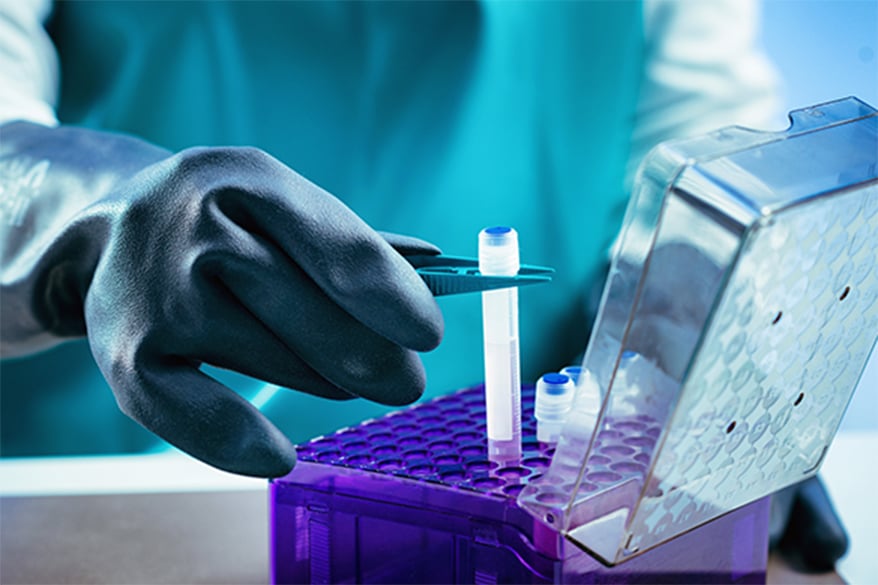
Yes. Messer supplies NF Nitrogen for pharmaceutical manufacturing applications that require a qualified gas supply, including inerting, blanketing, lyophilization support, and other controlled-atmosphere processes. Messer can also help determine the appropriate supply mode based on usage, purity requirements, documentation needs, and facility operations.
Messer supplies gases that meet applicable United States Pharmacopeia (USP) and National Formulary (NF) standards and supports customers with the documentation, traceability, and supply consistency expected in regulated pharmaceutical environments. Specific documentation requirements can be reviewed with Messer’s team based on the gas, application, facility requirements, and quality agreement expectations.
The right supply mode depends on gas usage, application criticality, storage space, delivery frequency, and future growth plans. Cylinders may be appropriate for lower-volume or point-of-use needs, while bulk systems can support higher ongoing demand. For larger or more continuous operations, on-site generation may be considered when it aligns with process, quality, and operational requirements.
Messer supports supply continuity through its North American production footprint, integrated distribution network, bulk storage capabilities, and centralized delivery coordination. Through its National Operations Center, Messer also provides 24/7 monitoring and telemetry-based tank management to help reduce operational risk and support proactive replenishment for critical operations.
Carbon dioxide is commonly used in incubation and cell culture applications to help maintain controlled atmospheric conditions and pH. Oxygen may also support aerobic bioprocessing and fermentation, while nitrogen and argon can be used where inerting, blanketing, or controlled-atmosphere support is required.