We're ready to help!



Effective water treatment solutions begin with a clear understanding of how water flows through your operation. Messer works closely with industrial facilities, municipalities, and engineering partners to evaluate existing processes, identify challenges, and analyze opportunities to improve performance without requiring expensive facility expansions.
Safety and quality are embedded into how we operate. Guided by our obsession with client service and our organizational commitment to doing the right thing, Messer's standards support the regulatory and operational requirements that govern municipal and industrial water treatment, from production and delivery to on-site systems.
Our regional teams work directly with plant operators and engineering partners to support implementation, evaluate treatment performance, and help facilities adapt systems as operating conditions change.
Messer’s dependable gas supply includes multiple air separation units, bulk storage assets, and an integrated distribution network ready to support consistent supply for critical water treatment processes. Our team will work with you to understand the right mode of supply based on treatment demand, site infrastructure, and continuity requirements. Depending on the application, that may include bulk systems for steady treatment requirements or on-site supply systems.
National Operations Center provides 24/7 monitoring, telemetry-based tank management, and centralized delivery coordination that helps you maintain stable treatment operations and avoid supply disruptions.
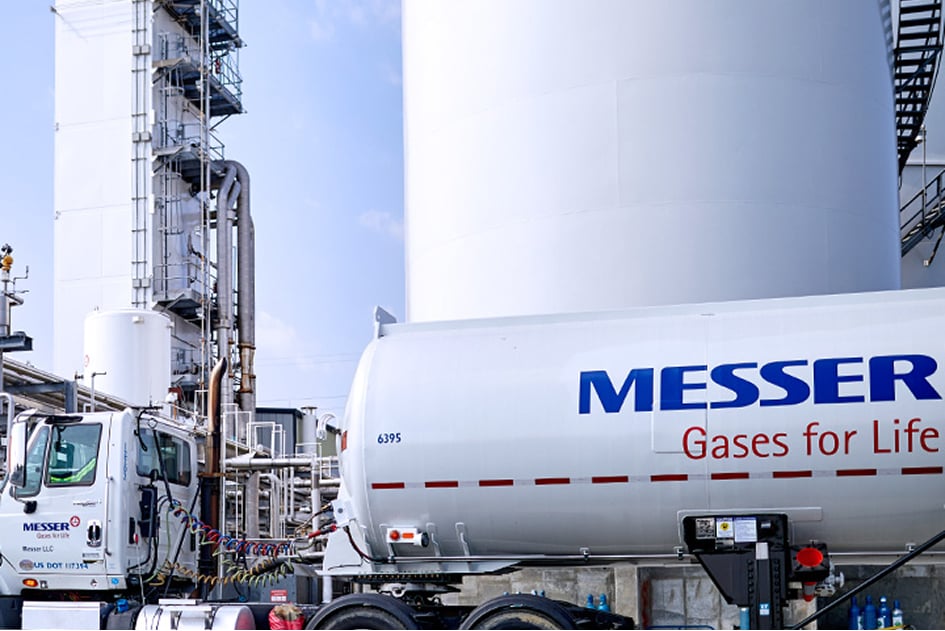
In lime softening and desalination post-treatment, CO2 is commonly used to lower pH and convert carbonate to bicarbonate, helping stabilize finished water and reduce scaling potential while supporting distribution-system corrosion control goals.
In biological wastewater treatment, microorganisms consume dissolved oxygen (DO) as they break down biodegradable organic material. Facilities manage aeration and DO setpoints to achieve target effluent quality and BOD limits.
Supplemental oxygen can increase oxygen transfer efficiency and help plants reduce aeration system power costs, respond to high-loading events, improve DO control, reduce odors in oxygen-limited zones, and increase treatment capacity within existing basins compared with air-only aeration.
Maintaining stable dissolved oxygen levels is critical for aquaculture operations, where fish health, growth rates, and stocking density all depend on consistent dissolved oxygen in the water. Messer supports aquaculture producers with dependable oxygen supply and application experience that help maintain optimal conditions across a range of systems, including a secure supply with appropriate storage sizing to protect fish populations in case of disasters or outage events.
Nitrogen limits for wastewater are becoming stricter as regulators work to reduce nutrient pollution and harmful algal blooms. Facilities may need to manage total nitrogen, ammonia, nitrate, and nitrite levels more closely, especially in sensitive watersheds. This can increase the need for advanced wastewater treatment processes that support reliable nitrogen removal.
In sewers, wet wells, and force mains, low oxygen conditions can lead to sulfide generation and odor/corrosion risk. While many odor programs use chemicals and ventilation/capture systems, some facilities also evaluate oxygen addition at specific points to help maintain more oxidizing conditions.
In ozone-based treatment systems, ozone is commonly generated from high-purity oxygen, and only a portion of the oxygen feed is converted to ozone (often in the ~6–15% range by weight), with the remaining oxygen leaving the generator unreacted.
Messer’s OXYCYCLE™ oxygen recovery technology helps improve efficiency by capturing unreacted oxygen and recycling it back into the ozone generator.
Many treatment processes require wastewater to meet strict pH limits before discharge. Carbon dioxide (CO₂) provides a controlled way to lower pH in tanks, basins, semiconductor fabs and even process streams by forming carbonic acid in water, often reducing the risk of equipment corrosion compared with strong mineral acids like sulfuric acid and lowering handling hazards.
Messer works with you to identify the right injection points within existing treatment systems to support consistent, buffered pH reduction without requiring major system changes or moving parts.

Carbon dioxide is used in water and wastewater treatment to safely reduce pH levels and stabilize process water without the handling risks associated with strong mineral acids.
Oxygen is used across a range of water and wastewater treatment processes to support oxidation, improve biological treatment performance, generate ozone for disinfection, and enhance overall process efficiency.
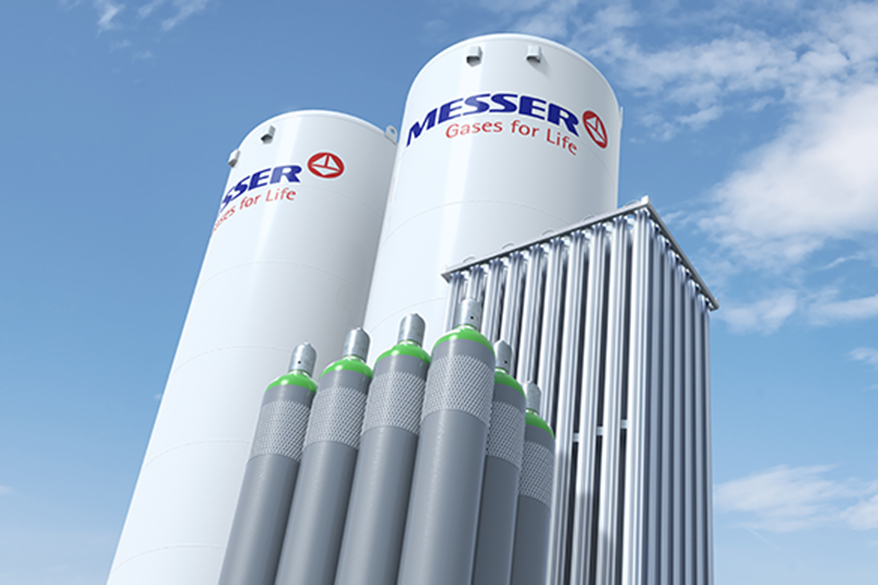

Gas-based treatment solutions can help water and wastewater operators improve process efficiency while reducing environmental impact. For example:
Oxygen-based injection systems can increase oxygen transfer efficiency, allowing treatment systems to achieve required dissolved oxygen levels with less power consumption than conventional air aeration.
Oxygen injection can help treatment facilities increase capacity within existing infrastructure, reducing the need for energy-intensive plant expansions.
Carbon dioxide offers a safer alternative to mineral acids for pH control.
Messer is ready to work with your team to reduce chemical consumption, support regulatory compliance, and implement more sustainable treatment operations.
We're ready to help!
